
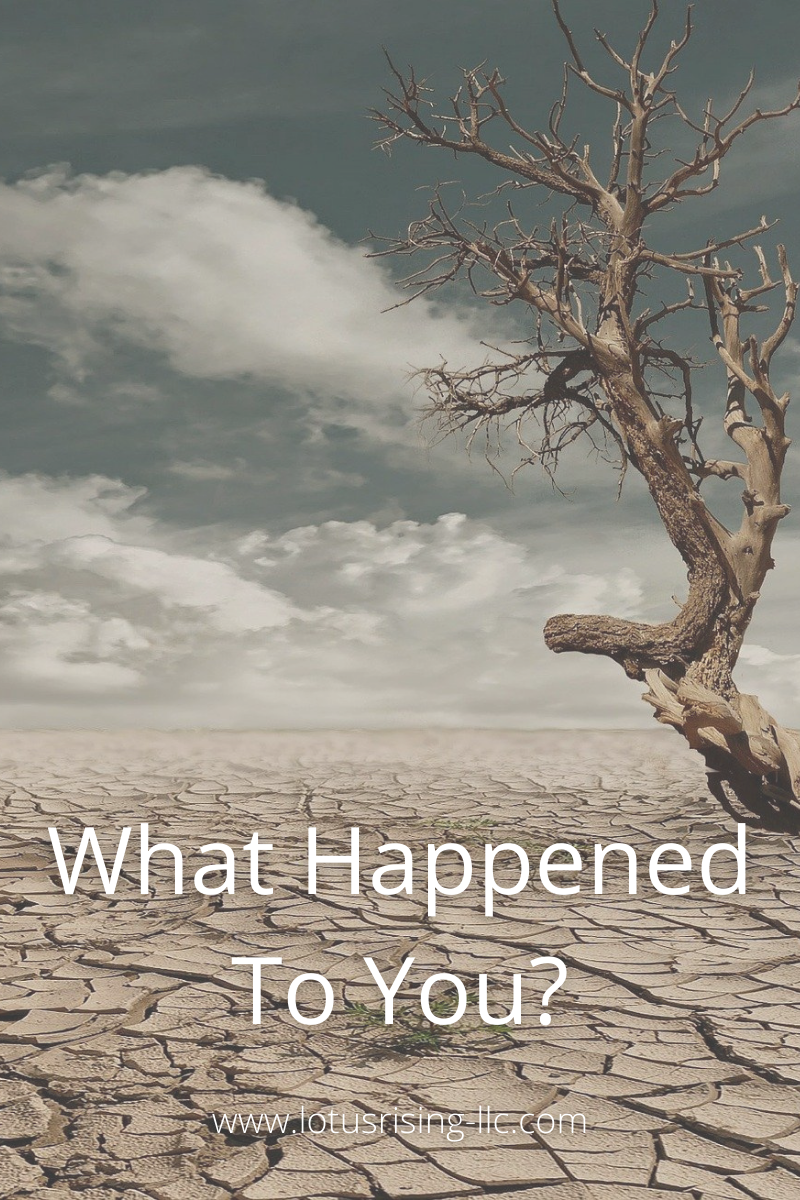
I recently listened to the book What Happened to You? By Bruce D. Perry and Oprah Winfrey. It does an excellent job of explaining trauma while telling stories from Perry’s work and Oprah’s life. Here are 4 big takeaways.
1. What happened to you? Instead of What’s wrong with you?
We’ve all seen the video of a grown adult freaking out on someone in the service industry like a fast-food restaurant. We may think to ourselves ‘What’s wrong with them?’
What if we changed the question to ‘what happened to them?’ Like a deep dive, what happened to them in their past to make them react in such an extreme way. We have a reason why we act the way we do and it comes from what happened to us. Our past dictates a lot of how we show up in the present. A lot of times our coping skills as children, for example, screaming and crying to get attention, no longer work as an adult. When we ask what’s wrong with that person who is acting out, we leave no space for understanding and we then may become activated into our stress response.
If you ask ‘what happened to you?’ It takes a gentle approach. An approach that shows more empathy and allows space for understanding. An important thing to note is the behavior from the screaming adult is not appropriate and shouldn’t be ignored. When we approach situations with empathy it allows space for healing and change. It also allows us to take a step back and realize that how they are acting likely has nothing to do with the person they are screaming at, which then allows us to self-regulate and approach the situation more calmly.

2. Your brain is organized to feel before you think.
You feel it before you think it. This is where the phrase trust your gut comes to mind. You process information from the bottom up. From your body first then your brain. Read that again. You are feeling emotions before your brain can even process what is happening. So when therapists tell you to listen to your body this is what they mean. Your body tells you what’s going on a lot faster than your brain can think.
3. Your connection to your community, culture, and family are greater predictors of your mental health than your trauma history.
If you are looking to build resilience this is a great place to start. I realize family for a lot of people are the ones who have caused harm. In this case, I want to remind you that family is not always blood. Sometimes you do choose your family.
4. Trauma is different for everyone.
Trauma is any unexpected stressor. It’s not about the event itself, it’s about how you process the event. You and I could witness the same traumatic event but have completely different reactions to it. One of us could go on doing daily functions and the other might develop PTSD. Same event, different reactions.
I would recommend this to book to everyone. It’s important for us to learn more about trauma so that we may heal. We all experience trauma and it’s important to be able to see how past event effect us today.
Leave a Reply